

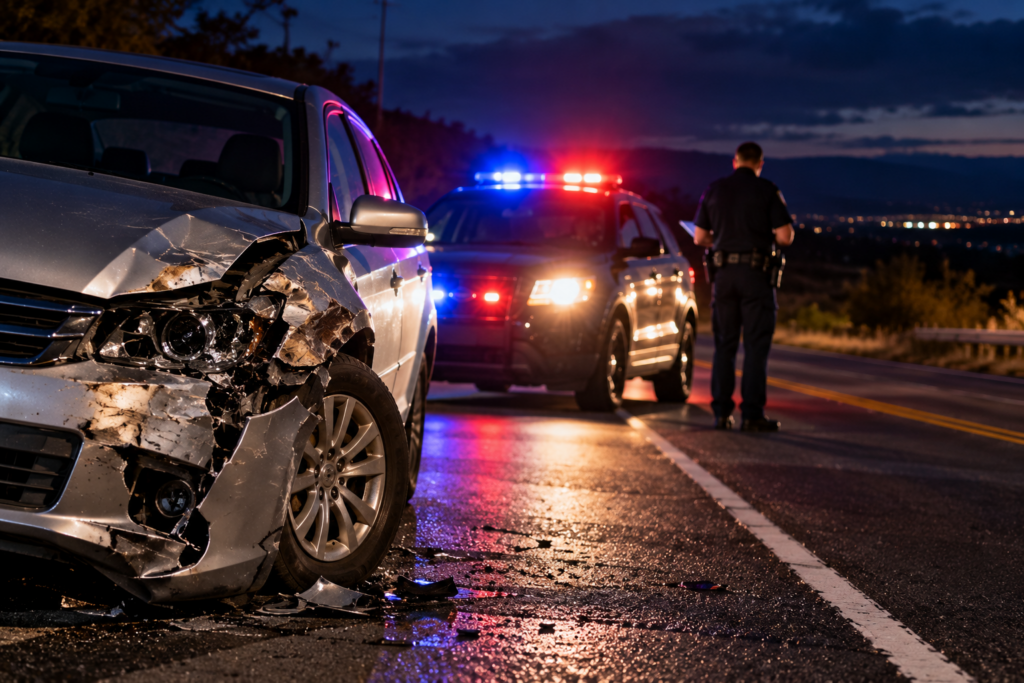
If a drunk driver injured you on Hawaii’s Big Island, you may have grounds to pursue compensation through a civil personal injury claim. Depending on the evidence, your case may also involve punitive damages or liability beyond the driver.
Drunk driving collisions raise legal questions that ordinary accident claims may not. Police investigations can produce evidence of impairment, while separate civil proceedings determine responsibility for your injuries and resulting losses.
At Rosenberg Hoffman, we help people injured by negligent drivers understand their rights under Hawaii law. Here’s what you should know about pursuing a claim after a DUI-related crash.
How DUI Accident Claims Differ From Other Car Accident Cases
A DUI accident can involve two separate legal proceedings: a criminal case against the impaired driver and a civil claim brought by the injured person.
These proceedings have different purposes.
Criminal prosecution addresses whether the driver violated Hawaii’s laws. A civil personal injury claim focuses on liability and compensation for the injuries caused.
| Criminal DUI Case | Civil Personal Injury Case |
|---|---|
| Brought by the government | Brought by the injured person |
| Determines criminal responsibility | Determines civil liability |
| May result in criminal penalties | May result in financial compensation |
| Requires proof beyond a reasonable doubt | Generally applies the preponderance-of-the-evidence standard |
| Can proceed separately from a civil lawsuit | Does not always require a criminal conviction |
Under Hawaii Revised Statutes §291E-61, operating a vehicle while impaired by alcohol or drugs is prohibited.
For alcohol-related offenses, the statute includes a threshold of 0.08 grams of alcohol per 100 milliliters of blood or 210 liters of breath. A driver may also violate the law through impairment even without a chemical test establishing that threshold.
A DUI arrest does not automatically establish every element of a civil claim. However, the evidence gathered during the investigation may be relevant to determining responsibility.
Key Evidence in Big Island DUI Accident Claims
Evidence of impairment can help establish what happened before a collision and whether the driver’s conduct contributed to your injuries.
The most useful evidence depends on the circumstances.
Police Reports and Officer Observations
A police report may document the collision location, witness accounts, and observations concerning the driver’s behavior.
Officers may record signs of impairment, statements made at the scene, or the results of investigative procedures.
Breath and Blood Alcohol Testing
Chemical testing may provide evidence of alcohol concentration around the time of an alleged offense.
Under HRS §291E-3, qualifying test results can be used as evidence of intoxication in specified criminal and administrative proceedings.
Their admissibility and significance in a civil lawsuit require separate consideration of the applicable evidence rules.
Witness Statements and Video Footage
Witnesses may describe the driver’s behavior before the collision, including erratic driving or other indications of impairment.
Surveillance footage from nearby businesses or dashboard cameras may provide additional information.
| Evidence | Potential Relevance |
|---|---|
| Police report | Documents the collision investigation |
| Breath or blood test | May provide evidence of alcohol concentration |
| Witness statement | Describes driving behavior or the collision |
| Video footage | May show events before or during the crash |
| Vehicle damage photographs | Helps document collision circumstances |
| Medical records | Establishes injuries and treatment |
Evidence should be preserved through lawful procedures. Some records may require formal requests or legal process.
Punitive Damages in Hawaii DUI Accident Cases
Potentially. Hawaii law permits punitive damages in certain civil cases involving sufficiently serious misconduct.
Unlike compensatory damages, which address an injured person’s losses, punitive damages are intended to punish particularly wrongful conduct and discourage similar behavior.
However, punitive damages are not automatic simply because a driver was intoxicated.
In Guieb v. Guieb (2025), the Hawaii Supreme Court reaffirmed that punitive damages require recoverable tort liability and clear and convincing evidence of qualifying misconduct, such as reckless disregard of a substantial risk of harm.
The circumstances surrounding the driver’s conduct matter.
Relevant evidence may include the severity of impairment, the driver’s behavior, and whether the driver knowingly disregarded a serious danger.
A DUI-related personal injury claim may also seek compensation for medical expenses, lost income, and other legally recoverable losses.
For more information about damages, see our guide to compensation in Hawaii personal injury cases.
Legal note: Punitive damages depend on the evidence and applicable legal standards. A DUI charge or conviction does not guarantee a punitive damages award.
Bar and Restaurant Liability in DUI Accidents
In some circumstances, an alcohol-serving establishment may face civil liability when its unlawful service of alcohol contributes to injuries caused by an intoxicated customer.
This issue is commonly called dram shop liability.
In Ono v. Applegate (1980), the Hawaii Supreme Court recognized a common-law claim against a tavern that unlawfully served alcohol to an intoxicated patron who subsequently injured another person.
That does not mean every bar or restaurant visited by an impaired driver is responsible for a later crash.
A potential claim requires evidence connecting the establishment’s conduct to the injuries.
Relevant questions include whether the driver was visibly intoxicated when served and whether the establishment’s actions violated an applicable legal duty.
Receipts, surveillance footage, and witness accounts may help establish what occurred.
Identifying another potentially responsible party can be especially important when a collision causes serious injuries, but liability must be supported by the facts.
Steps to Take After a DUI Accident on the Big Island
If you’re injured in a collision involving a suspected drunk driver, your first priority is your safety and medical care.
The following steps can also help preserve information relevant to a potential claim.
1. Seek Appropriate Medical Attention
Get emergency assistance when needed and follow medical advice.
Keep copies of treatment records and discharge instructions. These documents may help establish the nature of your injuries.
2. Report the Collision
Contact law enforcement when required and cooperate with the investigation.
If you suspect the other driver is impaired, share the observations supporting your concern rather than attempting to confront the driver.
3. Preserve Available Evidence
When safe, photograph the vehicles, road conditions, and visible damage.
Collect witness contact information and retain accident-related correspondence.
4. Keep Records of Your Losses
Save medical bills, receipts, and employment documentation showing time missed from work.
These records may help establish the financial effects of the collision.
5. Obtain Legal Guidance Before Resolving the Claim
Insurance communications and settlement offers can affect your rights.
Before signing a release, understand which claims the agreement resolves and whether additional compensation would remain available.
An attorney can also help identify relevant evidence and applicable deadlines.
Filing Deadlines for DUI Accident Lawsuits in Hawaii
Hawaii generally provides a two-year limitations period for personal injury actions under HRS §657-7.
However, motor vehicle accident claims are also subject to specific provisions under HRS §431:10C-315.
Depending on the claim and qualifying benefit payments, the applicable filing period may differ from a simple two-year calculation based on the accident date.
You should not assume that a pending criminal DUI prosecution extends your civil filing deadline.
Prompt legal review can help identify the relevant time limits while important evidence remains available.
Legal note: Filing deadlines depend on the claim, insurance benefits, and applicable statutory exceptions. A Hawaii attorney should review your specific circumstances.
Frequently Asked Questions About Big Island DUI Accidents
Can I sue a drunk driver without a criminal conviction?
Yes. Civil liability can be established independently of a criminal conviction, provided the necessary elements of the civil claim are proven.
What if the drunk driver refuses a breath or blood test?
A refusal does not automatically prevent a civil claim. Other evidence, including officer observations and witness accounts, may help establish impairment or negligence. The legal significance of a refusal depends on the circumstances.
Can tourists injured on the Big Island pursue compensation?
Yes. Visitors may have grounds to pursue a personal injury claim arising from a collision in Hawaii. The appropriate procedures depend on the parties and circumstances involved.
Speak With Rosenberg Hoffman About Your Big Island DUI Accident
A collision caused by a suspected drunk driver can leave you dealing with medical treatment, financial losses, and uncertainty about your legal options.
At Rosenberg Hoffman, we help injured individuals evaluate claims involving negligent and impaired drivers throughout Hawaii.
We can review the available evidence, discuss potential sources of compensation, and explain the legal requirements that may affect your case.
Learn more about our representation for accidents caused by drunk drivers.
Call 808-470-4819 or visit our contact page to schedule a free, 100% confidential consultation today.
Legal disclaimer: This article provides general information about DUI-related personal injury claims under Hawaii law and does not constitute legal advice. Civil liability, punitive damages, third-party responsibility, insurance coverage, and filing deadlines depend on the facts and applicable legal requirements.
