

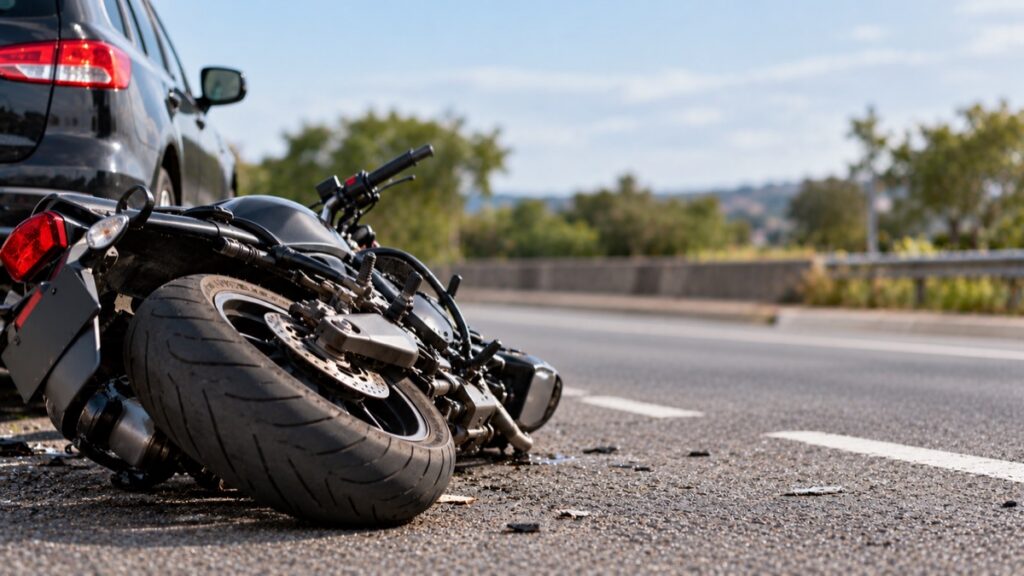
After a motorcycle accident in Hawaii, you may face medical bills, missed work, and questions about who is responsible. You might also hear from an insurance company before you understand the full extent of your injuries.
Motorcycle claims can involve different insurance rules than car accidents. Knowing what to do after a crash, how fault affects compensation, and when to contact a lawyer can help you make informed decisions.
Immediate Steps After a Motorcycle Accident
Your health comes first. Call 911 when emergency assistance is needed, and seek prompt medical attention. Some injuries, including concussions, may not cause obvious symptoms immediately.
Once you are safe, preserve information that could help explain the accident:
- Photograph the motorcycle, other vehicles, and road conditions.
- Collect witness contact information.
- Keep the police report number.
- Save your helmet, damaged equipment, and medical records.
- Retain insurance correspondence and settlement offers.
You may need to report the accident to your insurer. Be accurate about what happened, but avoid guessing about details you cannot remember.
Before accepting a final settlement or signing a release, consider speaking with an attorney about how the decision may affect your claim.
Not every motorcycle accident requires legal representation. However, certain situations make a consultation particularly useful.
| Your situation | Why speaking with a lawyer may help |
|---|---|
| You suffered a serious injury | Assess medical expenses, future treatment needs, and potential compensation. |
| You missed work | Evaluate lost income and possible long-term financial effects. |
| The other driver disputes fault | Review evidence and assess responsibility under Hawaii law. |
| An insurer offers an early settlement | Understand what you may be giving up before signing a release. |
| The other driver has limited insurance | Review other potentially available coverage. |
| A road hazard contributed to the crash | Identify potentially responsible parties and applicable claim procedures. |
You do not need to establish who was legally responsible before seeking advice. At Rosenberg Hoffman, we offer free consultations to help injured riders understand their options.
Understanding Motorcycle Insurance in Hawaii
Hawaii has a no-fault motor vehicle insurance system, but motorcycles are subject to different insurance requirements than typical passenger vehicles.
You should not assume that Personal Injury Protection (PIP) benefits associated with passenger cars automatically cover motorcycle injuries.
Depending on the policies and circumstances, medical expenses may involve health insurance, optional medical payments coverage, or a claim against a responsible driver’s liability insurance.
Uninsured or underinsured motorist coverage may also be relevant when the responsible driver has little or no insurance.
Hawaii generally requires applicable motor vehicle liability policies to provide at least $20,000 per person and $40,000 per accident in bodily injury coverage. Serious injuries can result in losses beyond those limits.
The actual coverage available depends on the policies involved. Reviewing them is often an important part of evaluating a motorcycle injury claim.
Motorcycles, mopeds, and e-bikes also have different legal classifications. If you were riding a moped or e-bike, the applicable insurance rules should be evaluated separately.
For additional insurance information, visit the Hawaii Insurance Division.
Fault and Comparative Negligence in Hawaii
Fault may be disputed when a driver turns across a motorcycle’s path, changes lanes, or fails to yield.
Evidence such as photographs, witness statements, police reports, and available video footage can help establish what happened.
Hawaii’s comparative negligence rule
Under Hawaii Revised Statutes § 663-31, an injured person’s compensation is generally reduced by their percentage of fault.
If a rider is found 30% responsible for an accident involving $100,000 in damages, the amount would generally be reduced to $70,000 before other applicable factors.
If the rider’s negligence exceeds the combined negligence of the parties against whom recovery is sought, the comparative negligence rule generally bars recovery.
An insurer’s initial assessment does not necessarily determine the final allocation of fault.
What about helmets and road hazards?
Hawaii generally requires motorcycle riders under 18 to wear approved helmets. Adult riders are generally not subject to the same requirement.
However, helmet use may become relevant if an insurer argues that it affected the severity of an injury. Not wearing a helmet does not automatically mean an adult rider caused the crash.
If loose gravel, damaged pavement, or another road hazard contributed to the accident, responsibility may involve the entity maintaining the roadway. Government-related claims can have special procedures and deadlines.
Compensation After a Motorcycle Accident
The value of a motorcycle injury claim depends on the circumstances. There is no reliable average settlement that predicts what an individual case is worth.
Depending on the evidence and applicable law, compensation may include:
- Medical expenses and reasonably established future care.
- Lost income or reduced earning capacity.
- Pain and suffering.
- Motorcycle and other property damage.
Fault allocation and available insurance coverage may also affect recovery.
Be cautious about accepting an early settlement. If treatment is ongoing, you may not yet know whether you will need additional care or how long the injury will affect your work.
Before signing a release, make sure you understand which claims you are resolving.
Hawaii Motorcycle Accident Claim Deadlines
Under Hawaii Revised Statutes § 657-7, many personal injury lawsuits must be filed within two years.
However, different deadlines or notice requirements may apply, particularly when a government entity is involved. Insurance policies may also impose separate reporting obligations.
Do not assume the general two-year period applies to every situation.
Seeking advice promptly can also help preserve evidence before it becomes difficult to obtain.
What Does a Motorcycle Accident Lawyer Cost?
We offer free consultations and handle many personal injury cases on a contingency-fee basis.
Under a contingency-fee agreement, attorney fees depend on a recovery, according to the agreement’s terms.
Before hiring a lawyer, ask how fees are calculated, which case expenses may arise, and how those expenses are handled if there is no recovery.
You should understand the written agreement before signing it.
How We Help Injured Motorcycle Riders
Choosing a lawyer means finding someone who can explain your options and communicate clearly throughout the process.
At Rosenberg Hoffman, clients speak directly with an attorney rather than relying solely on support staff.
Our offices are in Honolulu and Waipahu, and we serve injured people on Oahu and neighboring islands. Phone and video consultations are available.
Learn more about how we help injured riders on our Hawaii motorcycle accident lawyer page.
Frequently Asked Questions
1. Can I still file a motorcycle accident claim if I wasn’t wearing a helmet?
Potentially, yes. Hawaii generally does not require motorcycle riders aged 18 or older to wear helmets. However, helmet use may become relevant when evaluating whether it contributed to the severity of an injury. Not wearing a helmet does not automatically prevent you from pursuing a claim.
2. Can I pursue compensation if the driver who hit me was uninsured?
Possibly. Uninsured motorist coverage may provide benefits depending on your policy and the circumstances. Other potential sources of recovery may also need to be evaluated. Reviewing the available insurance policies can help clarify your options.
3. Can I hire a Hawaii motorcycle accident lawyer if I live on another island or the mainland?
Yes, you can consult a Hawaii attorney without necessarily visiting an office. At Rosenberg Hoffman, we offer phone and video consultations and serve injured people on Oahu and neighboring islands. If you live on the mainland and were injured while visiting Hawaii, we can discuss your circumstances remotely.
Speak With a Hawaii Motorcycle Accident Lawyer
If you are dealing with injuries, disputed fault, or insurance questions after a motorcycle crash, we can help you understand your possible next steps.
Call 808-470-4819 or contact Rosenberg Hoffman for a free consultation.
This article provides general information, not legal advice. Every claim depends on its facts and applicable law. Contacting our firm does not, by itself, establish an attorney-client relationship.
