

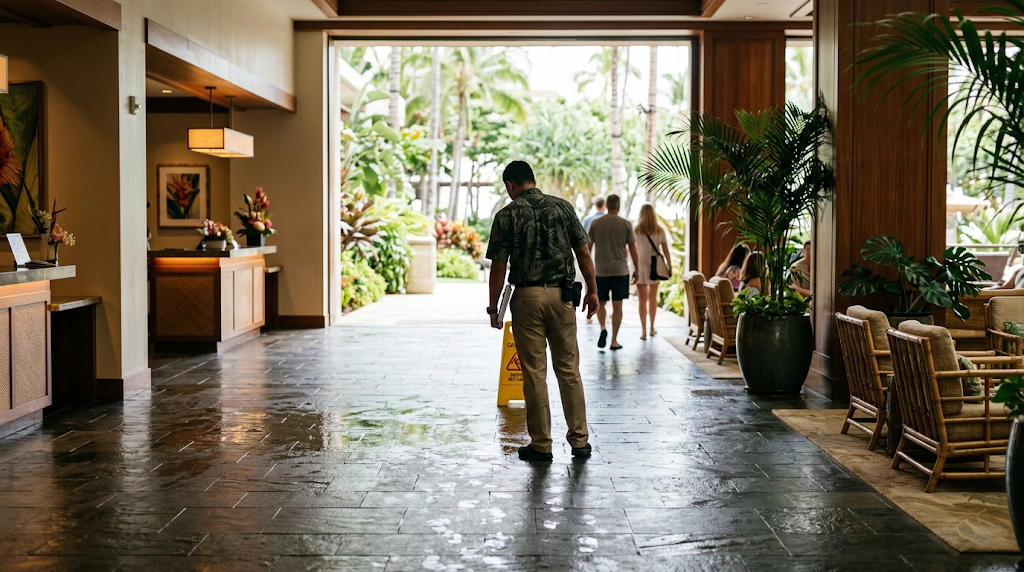
A slip and fall accident during your Hawaii vacation can leave you facing unexpected medical bills, interrupted travel plans, and uncertainty about your legal rights.
Whether you were injured at a Waikiki hotel, a Maui resort, or a restaurant on the Big Island, you may have grounds to pursue compensation if another party’s negligence contributed to your fall.
Tourists generally have the same opportunity as Hawaii residents to pursue personal injury claims. You may also be able to continue your claim after returning home.
At Rosenberg Hoffman, we help injured visitors understand Hawaii premises liability law and the steps involved in protecting their rights.
Steps to Take Immediately After a Slip and Fall in Hawaii
Your actions following an accident can help protect your health and preserve important information.
1. Seek Medical Attention
Falls can cause fractures, concussions, back injuries, and soft tissue damage. Some symptoms may not become noticeable until later.
Seek appropriate medical care and follow your healthcare provider’s recommendations. Request copies of treatment records before leaving Hawaii so your doctors at home can review them.
2. Report the Accident
Notify the hotel, restaurant, store, or property manager where the fall occurred.
Explain what happened accurately and ask whether an incident report can be prepared. Request a copy or reference number when available.
3. Photograph the Hazard
If you can do so safely, photograph the exact location of your fall, including wet surfaces, uneven flooring, damaged stairs, or missing warning signs.
Take close-up photographs and wider images showing the surrounding conditions.
4. Collect Witness Information
Ask witnesses for their names and contact details. This is particularly important when other tourists may leave Hawaii shortly afterward.
5. Preserve Relevant Records
Keep medical bills, photographs, incident reports, and correspondence with the property owner or insurer.
| Evidence | Why It Matters |
|---|---|
| Accident photographs | Documents the hazard and surrounding conditions |
| Incident report | Records details of the accident |
| Witness information | May support your account of what happened |
| Medical records | Documents injuries and treatment |
| Surveillance footage | May show the accident or conditions beforehand |
If surveillance cameras were nearby, request preservation of relevant footage promptly. An attorney can help determine appropriate steps for obtaining it.
Property Owner Liability in Hawaii Slip and Fall Cases
Under Hawaii premises liability law, property owners and occupiers generally must exercise reasonable care to protect people lawfully using their premises.
However, a property owner is not automatically responsible for every fall.
A negligence claim generally requires establishing that a legal duty existed, the responsible party breached that duty, and the breach caused an injury and resulting damages.
What Must You Prove?
In many slip and fall cases, the central issue is whether the property owner knew or reasonably should have known about a dangerous condition.
For example, a hotel may face liability when employees fail to address a spill that remained on the floor long enough that reasonable inspection or maintenance should have discovered it.
Relevant questions include:
- How long did the hazardous condition exist?
- Did employees receive complaints or warnings?
- Were reasonable inspections performed?
- Was the hazard corrected or clearly identified?
- Did the condition contribute to the fall?
The answers depend on the available evidence. Maintenance records, employee statements, and surveillance footage may help establish whether reasonable care was exercised.
Common Slip and Fall Hazards in Hawaii
Visitors may encounter hazardous conditions at hotels, resorts, restaurants, shopping centers, and other properties.
Examples include wet lobby floors, slippery poolside walkways, uneven pavement, broken handrails, damaged stairs, and poorly lit corridors.
Hawaii’s tropical climate can also create maintenance challenges. Rainwater tracked into entrances and moisture around outdoor facilities may require appropriate cleaning and inspection practices.
However, the presence of water or another hazard does not automatically establish negligence. The property’s actual circumstances and applicable duty of care remain important.
How Does Comparative Negligence Affect Your Claim?
Hawaii follows a modified comparative negligence system under HRS §663-31.
This means you may still recover compensation when your own negligence contributed to the accident, although your recovery may be reduced.
For example, if your recoverable damages total $50,000 and you are found 20% responsible, your award would be reduced to $40,000.
Recovery may be barred when your negligence exceeds the combined negligence of the parties against whom you seek compensation.
Property owners may argue that an injured visitor ignored warning signs, failed to notice an obvious condition, or was distracted while walking.
However, these circumstances do not automatically eliminate a claim. Responsibility must be evaluated using the facts and applicable law.
Compensation Available to Injured Tourists
| Type of Compensation | What It May Cover |
|---|---|
| Medical expenses | Emergency treatment in Hawaii, follow-up care, rehabilitation, and future medical needs |
| Lost income | Wages lost because of the injury and potential loss of earning capacity |
| Pain and suffering | Physical discomfort, emotional distress, and other legally recognized effects |
| Additional expenses | Documented, injury-related costs, including qualifying travel changes |
For visitors, additional costs such as medically necessary travel changes may also warrant evaluation. However, a disrupted vacation does not automatically make every unused activity or travel expense recoverable.
Keep receipts, medical records, and documentation connecting claimed expenses to the injury.
Learn more about compensation in Hawaii personal injury cases.
Pursuing a Slip and Fall Claim After Returning Home
Yes. Leaving Hawaii does not automatically prevent you from pursuing a personal injury claim arising from an accident in the state.
However, managing a claim from another location can introduce practical challenges.
You may need to obtain records from Hawaii healthcare providers, communicate with local witnesses, and preserve evidence held by the property owner.
A Hawaii personal injury attorney can help coordinate these requirements and explain whether your participation may be necessary during legal proceedings.
Handling Insurance Settlement Offers
A property owner’s insurance company may contact you after the accident to request information or discuss a settlement.
Before accepting an offer, consider whether your medical condition and future treatment needs are sufficiently understood.
An early settlement may not account for additional treatment or other losses discovered later.
Review any release carefully because signing it may prevent you from pursuing further compensation for the claims covered by the agreement.
You can seek legal guidance before agreeing to settlement terms, even if you have already returned home.
How Long Do You Have to File a Slip and Fall Lawsuit in Hawaii?
Under HRS §657-7, Hawaii generally applies a two-year limitations period to personal injury actions, measured from when the cause of action accrues.
Certain exceptions and different procedures may apply, particularly when minors or government entities are involved.
Being an out-of-state visitor does not automatically extend the filing deadline.
Acting promptly can also help preserve evidence. Surveillance footage may be overwritten, witnesses may become difficult to contact, and hazardous conditions may be repaired before they are documented.
Legal note: Filing deadlines depend on the circumstances, responsible party, and applicable exceptions. Individual claims require legal review.
Discuss Your Hawaii Slip and Fall Injury With Rosenberg Hoffman
A slip and fall during your vacation can create medical, financial, and logistical challenges that continue after you return home.
At Rosenberg Hoffman, we help injured individuals understand their rights and evaluate potential claims under Hawaii premises liability law.
Whether your accident occurred at a resort, restaurant, hotel, or other property, we can review the circumstances, discuss available evidence, and explain potential next steps.
Call 808-470-4819 or visit our contact page to schedule a free, 100% confidential consultation today.
Legal disclaimer: This article provides general information about Hawaii premises liability and personal injury law and does not constitute legal advice. Property owner liability, comparative negligence, available compensation, and filing deadlines depend on the circumstances of each case.
