

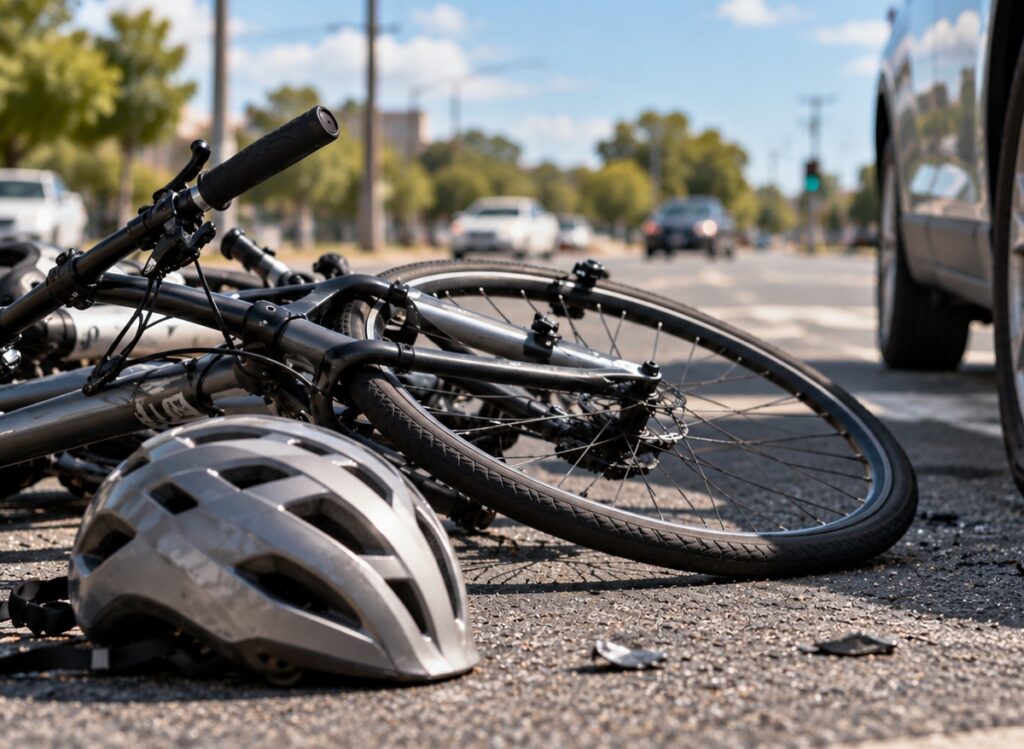
After a bicycle accident, your first concern should be your health and safety. But once you’re safe and able to do so, there is another important step: preserving information about what happened.
A damaged bicycle, a photograph of the road, or the name of someone who witnessed the collision may become important later. The challenge is that some evidence can disappear quickly. Vehicles are repaired, road conditions change, and witnesses become harder to reach.
If you were injured while cycling in Hawaii, knowing what to document can help you avoid unnecessary uncertainty when questions arise about the accident.
Evidence can help clarify how a crash happened and how your injuries have affected you. If you were injured while cycling, you can also learn more about RH Law’s bicycle accident legal services in Hawaii.
Start With Your Safety, Not Your Camera
Do not put yourself in danger to collect evidence. If you are injured, move out of immediate traffic danger if you can do so safely and seek appropriate medical attention.
Call 911 when emergency assistance is needed. If you cannot photograph the scene or collect information because of your injuries, that does not mean you have lost the ability to pursue a claim.
A family member, witness, or other person may be able to help preserve information afterward. The important thing is to document what you reasonably can without delaying necessary care.
Photograph the Accident Scene Before Conditions Change
If it is safe to take photographs, try to capture more than the damage to your bicycle.
| What to photograph | Why it may matter |
|---|---|
| Overall accident scene | Shows the location and surrounding conditions |
| Bicycle and vehicle positions | Helps document where the bicycle and vehicles were after the collision |
| Bicycle damage | Records visible damage before repairs |
| Vehicle damage and license plates | Helps identify involved vehicles and document their condition |
| Road markings and traffic signs | Provides context about the intersection, bike lane, or roadway |
| Debris, skid marks, or road hazards | Preserves details that may disappear after the scene is cleared |
| Visible injuries | Creates a record of injuries soon after the accident, when appropriate |
Take both wide photographs showing the overall scene and closer photographs of specific details. Do not put yourself at risk to capture an image.
Write Down What You Remember While It Is Fresh
You may remember the collision clearly at first, but details can become harder to recall over time.
As soon as you feel well enough, write a short account of what happened. Include:
- The date, approximate time, and location
- Your direction of travel
- What you observed immediately before the collision
- The actions of any driver or other road user involved
- Traffic signals, signs, or road conditions you remember
- What happened immediately afterward
Keep your notes factual. Separate what you personally saw or heard from what someone else told you.
You do not need to know who was legally responsible to write a useful account. In fact, recording your observations without trying to reach a legal conclusion can make your notes more valuable.
Keep Witness Information and Accident Records Together
Someone who saw the collision may remember details you missed, particularly if you were injured or disoriented.
If a witness is willing, ask for their name and contact information. Avoid pressuring anyone to agree with your account or speculate about fault.
If law enforcement responds, record the responding agency and any report or incident number provided. You can later ask the appropriate agency how to request a copy of the report.
Store photographs, notes, witness details, and related correspondence in one place. Keeping the original files, rather than only screenshots or edited copies, may preserve useful information such as timestamps.
Do Not Repair or Discard Your Bicycle Too Soon
A damaged bicycle may contain information about how the collision occurred.
Before arranging repairs or disposal, consider preserving:
- The bicycle in its post-accident condition
- The helmet worn during the collision
- Torn or damaged clothing
- Damaged lights, bags, or accessories
- Repair estimates and purchase records
If the bicycle must be moved or stored, photograph it first. If repairs are necessary, keep detailed records of the work performed and the parts replaced.
A repair shop may be able to document the damage, but a repair estimate does not necessarily establish how the accident happened or who caused it.
If you are considering an injury claim, speak with an attorney before making irreversible changes to potentially important evidence when practical.
Medical Records Can Help Establish What Happened After the Crash
Evidence is not limited to the road or the bicycle.
Medical documentation can help establish when you sought care, what symptoms you reported, and how your condition was evaluated.
Keep copies of relevant records, including visit summaries, treatment instructions, referrals, prescriptions, and bills. You may also find it helpful to maintain a simple record of appointments and how your injuries affect ordinary activities.
Describe your symptoms accurately to healthcare professionals. Do not minimize them, but do not exaggerate them either.
Some symptoms may become noticeable after the initial accident. If your condition changes, seek appropriate medical advice rather than assuming the symptoms will resolve on their own.
What If You Did Not Collect Evidence at the Scene?
Many injured cyclists leave the accident scene without taking photographs or speaking to witnesses. That is understandable, especially when an ambulance ride or urgent medical care takes priority.
There may still be useful information to preserve afterward.
Consider whether you have:
- Photos taken by someone who was with you
- Messages sent shortly after the collision
- A police incident or report number
- Medical records from your first visit
- Receipts for transportation, treatment, or bicycle-related expenses
- Contact details for anyone who arrived shortly after the crash
Write down what you remember as soon as you can. Be clear about which details are based on memory and which are supported by records.
You can also note nearby businesses or properties that may have had cameras facing the accident location. Whether footage exists, can be obtained, or has been retained will depend on the circumstances.
Digital Evidence May Be Worth Preserving
Cyclists sometimes have additional records without realizing it.
Depending on what you used during your ride, potentially relevant information could include:
- Bicycle computer or GPS ride data
- Fitness-app activity records
- Helmet-camera or action-camera footage
- Dashcam footage shared by another road user
- Messages or calls made immediately after the incident
If you have these records, preserve the original data where possible.
Be careful about posting accident details or injury updates publicly while facts are still being established. Social media posts can lack context and may later be interpreted differently from what you intended.
You do not have to reconstruct every second of the collision. The goal is to retain accurate information that already exists.
Why Evidence Matters When Accounts of the Accident Differ
After a bicycle collision, the people involved may remember events differently.
A driver might describe where the cyclist was riding in one way, while the cyclist remembers a different sequence. Road conditions, traffic signals, and vehicle movements may also become disputed.
Photographs, contemporaneous notes, witness accounts, and other records can help clarify those questions.
No single photograph or document automatically proves responsibility. Evidence needs to be considered together with the surrounding circumstances and applicable law.
This is one reason preserving information early can matter even if you are not yet sure whether you want to pursue a personal injury claim.
When Should You Speak With a Hawaii Bicycle Accident Attorney?
You do not need to have every document organized before asking legal questions.
Consider speaking with an attorney if you suffered a significant injury, there is disagreement about how the collision occurred, or important evidence may be lost.
At Rosenberg Hoffman Law, we represent people pursuing personal injury claims in Hawaii. We can discuss the circumstances of your bicycle accident, the information you have already gathered, and what additional evidence may be relevant.
Our approach emphasizes direct communication with an attorney, so you can ask questions and understand the issues affecting your situation.
If you are unsure whether the evidence you have is enough to support a claim, learn more about how we help people injured in moped, bicycle, and pedestrian accidents in Hawaii.
You Do Not Need a Perfect Record to Ask for Help
The period after a bicycle accident can be stressful. You may be dealing with medical appointments, bicycle damage, missed work, or unanswered questions about what happened.
Preserve what you reasonably can, but do not assume that missing a photograph or forgetting a witness’s name means you have no options.
If you were injured in a bicycle accident in Hawaii, visit our Contact page or call 808-470-4819 to discuss your situation.
This article provides general information, not legal advice. Reading it or contacting our firm does not, by itself, establish an attorney-client relationship.
