

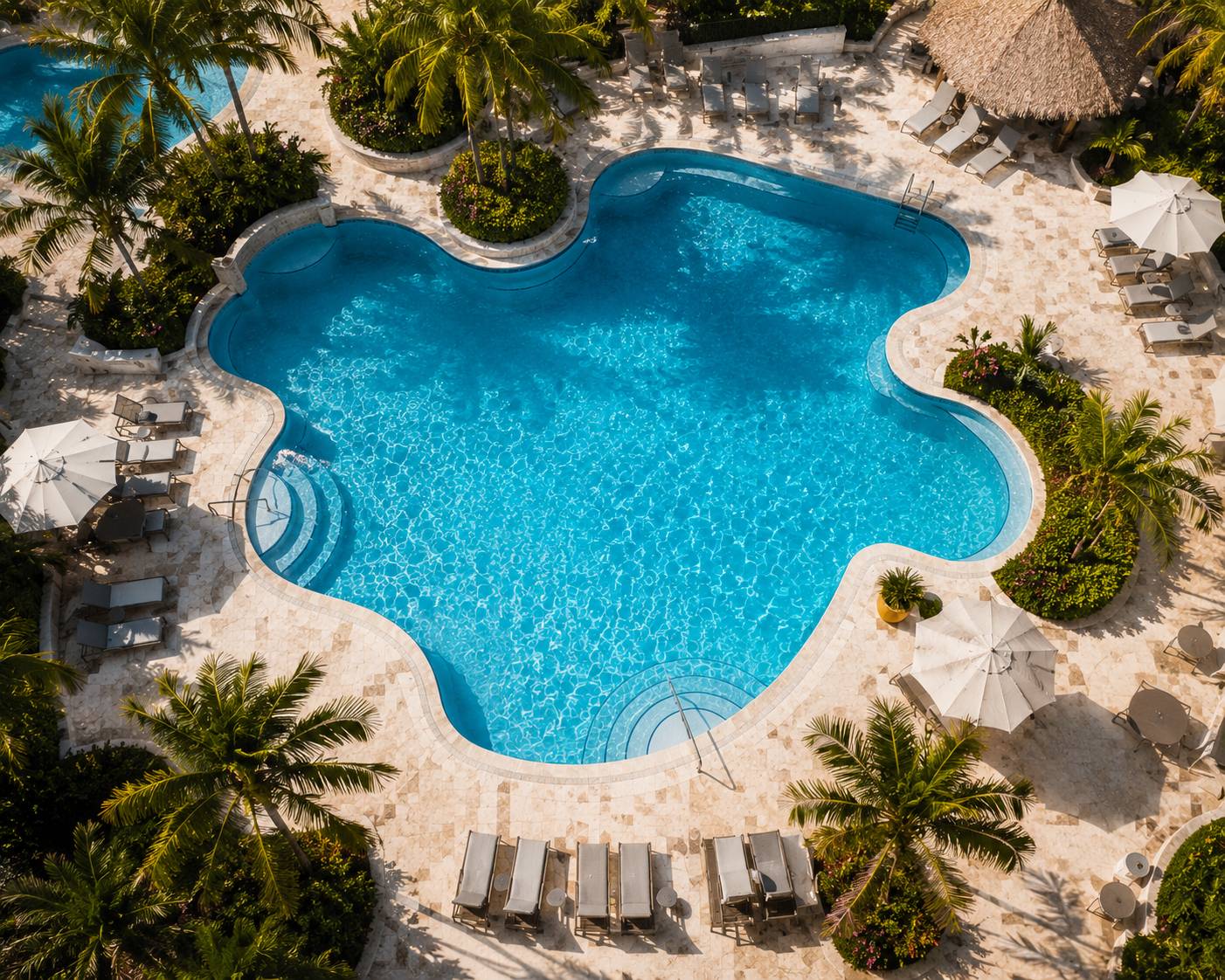
The expansive, multi-tiered swimming pools, lagoons, and water features at Waikiki and neighbor island resorts are a primary attraction for families visiting Hawaii. These commercial aquatic amenities are designed to offer a safe, luxurious environment for guests to relax and swim.
Tragically, swimming pools are also zones of extreme vulnerability. Accidental drownings and near-drowning events—which often cause permanent, catastrophic brain damage due to prolonged oxygen deprivation—happen far too frequently on commercial properties.
If your family is picking up the pieces after a devastating pool accident or the tragic loss of a loved one at a Hawaii resort, you are likely feeling completely overwhelmed. When you look for accountability, corporate resort operators will almost always point directly to their prominently displayed signage: “Warning: No Lifeguard on Duty. Swim at Your Own Risk.” They will confidently argue that these signs completely insulate them from legal liability, attempting to paint the tragedy as a case of parental neglect or personal recklessness.
Under Hawaii premises liability law, a “Swim at Your Own Risk” sign is not an automatic shield for a resort operator. If a property owner fails to maintain a safe aquatic environment, they can be held civilly and financially liable.
The Legal Threshold: Proving Fault in Resort Aquatic Facilities
In Hawaii, hotel and resort operators owe their paying guests—classified legally as invitees—the highest duty of care. A resort operator has an affirmative duty to keep their pool decks, swimming facilities, and surrounding property in a reasonably safe condition.
To hold a resort legally responsible for a drowning or near-drowning event, your legal team must establish that the business committed independent negligence that directly caused the tragedy. Common structural and operational failures include:
1. Defective or Inoperable Swimming Pool Gates and Barriers
Under local county building codes and structural safety standards, commercial pools must be enclosed by self-closing, self-latching security fences to prevent unsupervised toddlers or young children from wandering into deep water. If a resort fails to repair a broken gate latch, they are directly responsible if a child gains access to the pool area and drowns.
2. Clouded or Murky Water Chemistry Failures
Resort pools face heavy chemical usage and intense filtration demands. If a hotel’s maintenance staff fails to manage proper water filtration, the pool water can become heavily clouded or murky. In a civil lawsuit, we use this failure to prove negligence: if a swimmer loses consciousness and sinks to the bottom, lifeguards or bystanders cannot see them through the murky water, drastically delaying life-saving rescue efforts.
3. Negligent Lifeguard Supervision and Training
If a luxury resort chooses to provide active lifeguard services to market their property as a premium family destination, those lifeguards must perform their duties competently. If a lifeguard is distracted by a smartphone, leaves their stand unmonitored, or lacks proper certification, the resort parent company can face devastating direct claims for negligent supervision.
Bypassing No-Fault Systems in High-Stakes Premises Claims
It is important to recognize that an accidental drowning or pool injury at a commercial resort bypasses standard auto insurance tracking frameworks. You do not have to cross arbitrary medical caps before seeking justice, unlike the auto insurance rules detailed on our What You Should Know About Hawaii’s No-Fault Insurance Law page.
Because drowning incidents are pure premises liability actions, your legal team files a direct claim against the resort’s commercial general liability (CGL) and umbrella insurance policies.
These corporate policies carry multi-million dollar limits, which are necessary to cover the extensive lifetime costs associated with near-drowning injuries—such as 24/7 specialized neurological care, long-term rehabilitation, and severe emotional distress. To see how Hawaii courts structure financial compensation for these catastrophic quality-of-life losses, explore our overview of What Compensation Can You Recover for a Hawaii Personal Injury Case?.
Defending Families Against Unfair Comparative Fault Claims
The moment a civil action is initiated against a major resort brand, their legal defense team will attempt to utilize Haw. Rev. Stat. § 663-31, Hawaii’s 51% Modified Comparative Negligence Rule. They will try to pin 51% or more of the blame on the parents or the victim to completely deny your right to a recovery check.
To beat these defensive strategies, our personal injury lawyers systematically secure objective evidence:
- Subpoenaing Internal Video Surveillance Hard Drives: We pull the resort’s high-definition camera feeds to verify the exact timeline of the incident, proving how long the swimmer was left under the water without assistance.
- Compiling Maintenance and Chemical Logs: We review internal records to track down water clarity levels, filter checks, and gate inspections leading up to the accident.
- Auditing Corporate Training Manuals: We verify whether the resort’s staff followed standard operating protocols for emergency response and water safety management.
Quick Reference: Aquatic Safety Breaches vs. Resort Defenses
| Aquatic Hazard Style | Primary Resort Defense Tactic | Real Hawaii Legal Outcome |
|---|---|---|
| Broken Self-Latching Security Gate (Structural) | “Parents failed to supervise their child properly.” | Resort Liable: Violating municipal building codes creates a direct, unmitigated property defect. |
| Cloudy, Chemically Unbalanced Water (Operational) | “The swimmer had an underlying health condition.” | Resort Liable: Poor water clarity directly delays emergency rescue times, establishing proximate cause. |
| Defective Anti-Entrapment Drain Covers (Maintenance) | “The guest shouldn’t have been swimming near the filter drain.” | Resort Liable: Failing to install modern safety drain caps creates an extreme suction hazard. |
Real Trust: Tenacity When Facing Complex Claims
Overcoming corporate liability loopholes and challenging defense networks requires a trial team that refuses to back down simply because a case looks difficult at first glance. You can review our extensive record of navigating complex personal injury actions on our Case Results section. Here is how our attorneys handle difficult legal battles:
“No one took the time to take my daughter’s case. McKay was persistent and was able to get a settlement for my daughter… thank you all for your hard work and persistence. Justice is served.” — Alvin J., Verified Google Review via Attorney at Law
Hold Negligent Resort Operators Accountable: Contact Our Firm
If your family has experienced a catastrophic pool accident or a tragic loss at a Hawaii resort, do not let corporate risk managers or insurance adjusters dictate your legal options. They will attempt to use your grief to secure a fast, lowball settlement check before the full lifelong costs of care are understood.
At Rosenberg Hoffman, our Honolulu-based personal injury lawyers have been standing up to multi-billion-dollar hotel corporations and international insurance networks since 1995. We insulate your family from the stress of a legal battle, manage all corporate risk communications, secure vital maintenance logs, and build an unyielding case to protect your family’s future.
We represent injury survivors across a full suite of local personal injury categories. Whether your situation involves a devastating resort Slip/Trip-and-Fall Injury, a catastrophic intersection collision involving Car Accidents, or a severe crash caused by Drunk Drivers, our team knows how to secure results.
We provide specialized representation for heavy commercial Truck Accidents, two-wheeled Motorcycle Accidents, and transit claims dealing with Moped, Bicycle, and Pedestrian Accidents. For our traveling guests and service members, we provide focused counsel regarding Tourist and Military Injuries. If an unleased animal attacked you on local property, we handle Dog Bites and Attacks. In the most heartbreaking instances, we provide compassionate, relentless advocacy for families pursuing Wrongful Death actions.
When you choose our firm, you deal directly with your personal injury attorney from start to finish, never an assistant. We handle all premises liability litigation on a strict contingency-fee basis—you pay absolutely nothing upfront, and we collect zero legal fees unless we successfully win your financial settlement.
Call 808-470-4819 or visit https://rhlawhi.com/contact/ to schedule a free, 100% confidential case evaluation.
