

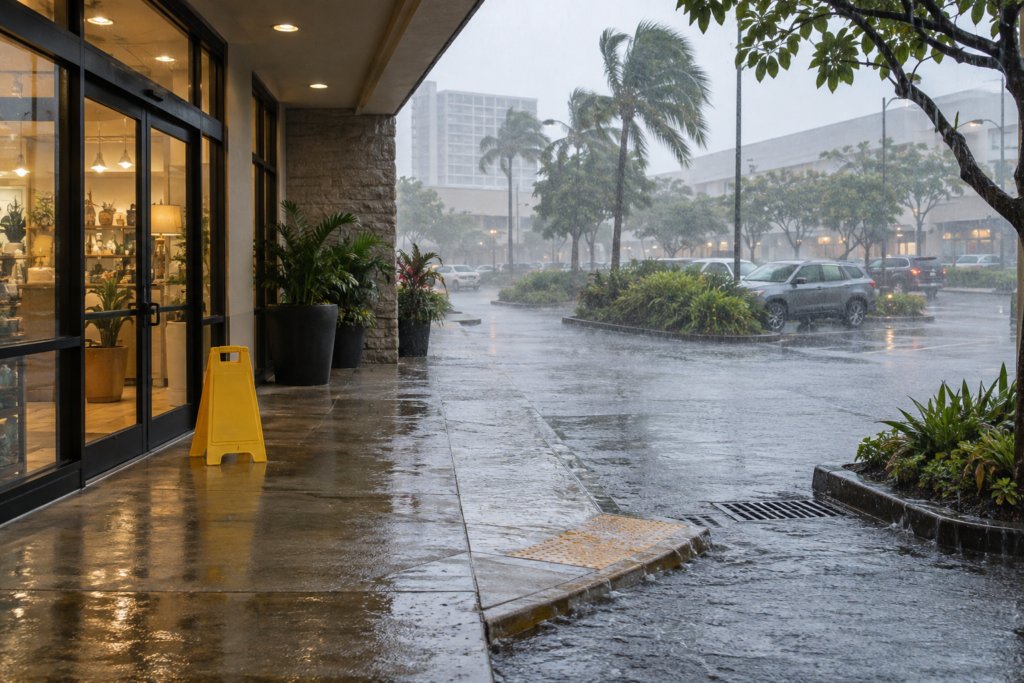
September marks the peak of the Central Pacific hurricane season and a transition into intense tropical downpours across the Hawaiian islands. While residents and visitors embrace the tropical climate, violent storms bring heavy rainfall, flash flooding, and high winds that drastically alter property safety conditions. When commercial property owners, retail centers, office buildings, and resort operators fail to prepare for severe weather, neglected hazards turn public spaces into dangerous traps. Slipping on unmanaged rainwater pooling in a building lobby, tripping over wind-dislodged architectural fixtures, or getting struck by poorly secured outdoor signage can cause catastrophic injuries.
At Rosenberg Hoffman, our Honolulu-based trial attorneys understand that severe weather does not excuse property owners from their legal responsibilities. While storms are natural, failing to mitigate foreseeable weather-related hazards is pure negligence. Below is a comprehensive look at how premises liability applies during Hawaii storm seasons, what duties commercial property owners carry, and how we secure full financial recovery for injured victims.
The Legal Duty of Property Owners During Hawaii Storms
Property owners and business operators in Honolulu and across Oahu are legally required to maintain safe premises for all visitors, customers, and tenants. When a severe tropical storm or heavy downpour strikes, that duty does not vanish. In fact, it intensifies. Owners must take reasonable precautions before, during, and immediately after a severe weather event to address foreseeable risks.
Under Hawaii premises liability principles, commercial operators must actively monitor property conditions as weather worsens. A failure to address preventable storm hazards constitutes actionable negligence:
- Unmanaged Entryway Puddles: Rainwater tracked into building lobbies, shopping malls, and supermarkets creates slick floor hazards. Property management teams must deploy heavy-duty absorbent mats, warning cones, and continuous mopping schedules.
- Roof Leaks and Ceiling Collapses: Severe wind-driven rain frequently exposes neglected commercial roofs. When water leaks through ceiling tiles and pools silently on interior flooring, unsuspecting shoppers face severe slip and fall risks.
- Securing Outdoor Fixtures: High winds can easily pick up unanchored patio furniture, umbrellas, trash receptacles, or loose building panels at resorts and restaurants, turning them into hazardous projectiles.
- Exterior Drainage Maintenance: Blocked storm drains, clogged gutters, and unmanaged parking lot runoff can cause sudden flash flooding or slick hydroplaning zones on commercial property.
Establishing liability requires proving that the property owner had notice of the dangerous condition and failed to take prompt, reasonable steps to fix it or warn visitors. You can review our foundational advocacy by visiting our firm overview page.
Common Storm-Related Premises Injuries and Hazards
Severe weather accidents encompass a broad spectrum of physical trauma, ranging from severe bone fractures and torn ligaments caused by sudden slips to traumatic brain injuries from slip and fall impacts and lacerations from flying or falling debris.
Investigating these weather-related incidents often uncovers systemic maintenance failures:
- Delayed Hazard Warnings: Failing to place wet floor signs near entrances during active downpours or failing to close off leaking interior corridors violates basic commercial safety standards.
- Ignored Roof and Plumbing Repairs: Property managers who postpone necessary structural roof repairs to save money create a direct hazard the moment heavy seasonal rains arrive.
- Inadequate Exterior Lighting: Power flickers and storm outages plunge stairwells, parking garages, and walkways into darkness, hiding wet patches and tripping hazards from view.
When commercial entities blame bad weather entirely on Mother Nature, our trial attorneys push back. We subpoena maintenance logs, weather alerts, surveillance footage, and past repair records to prove whether the property owner’s lack of storm preparation caused your injury.
What You Can Recover: Comprehensive Financial Compensation
Severe slip and fall accidents resulting from unmanaged storm hazards frequently cause debilitating injuries that require extensive medical intervention. Hawaii law allows injured victims to pursue full financial recovery across two primary categories of damages:
- Economic Damages: Every measurable monetary loss resulting from the accident. This includes emergency medical transport, emergency room stabilization, orthopedic surgeries, physical therapy, assistive medical equipment, and lost wages if your injuries prevent you from working.
- Non-Economic Damages: Compensation for intangible losses such as physical pain and suffering, emotional distress, scarring, and the diminished quality of your daily life.
You can read our detailed guide on what compensation you can recover for a Hawaii personal injury case to explore how financial damages are calculated under local law.
Immediate Steps After a Storm-Related Property Injury
The actions taken immediately following a slip and fall or property accident during severe weather are critical for preserving evidence and protecting your legal rights.
| Immediate Action | Purpose and Legal Protection |
|---|---|
| Seek Immediate Medical Care | Visit an emergency room or urgent care clinic on Oahu right away to treat injuries and generate formal medical documentation. |
| Preserve Photographic Evidence | Use your smartphone to photograph the puddle, active roof leak, unmanaged entryway, or hazard before staff clean it up. |
| Request Incident Reports | Insist that property management or business security file a formal incident report and obtain a physical copy before leaving. |
Avoid signing liability waivers or giving recorded statements to commercial insurance adjusters. Corporate adjusters often try to argue that storm conditions absolve them of all responsibility. You can reach out directly via our contact page or call us at 808-470-4819 for immediate guidance.
Hawaii Statute of Limitations for Property Negligence Claims
Time is a strict legal constraint when pursuing a personal injury claim against a commercial property owner or business operator in Hawaii. Under Hawaii Revised Statutes Section 657-7, the general statute of limitations for filing a personal injury lawsuit is two years from the exact date of the incident.
Failing to file within this statutory window permanently bars your right to seek financial recovery. Furthermore, commercial video surveillance systems frequently overwrite their footage automatically, and weather cleanup erases physical evidence quickly. Prompt legal action ensures that formal evidence preservation letters are served immediately, locking down security footage, maintenance logs, and eyewitness testimony.
Protect Your Rights: Contact Rosenberg Hoffman Today
If you or a loved one suffered a severe injury due to unmanaged storm hazards, roof leaks, or slippery property conditions on Oahu during severe weather season, do not let commercial insurers evade accountability. At Rosenberg Hoffman, our Honolulu-based personal injury lawyers have represented injured clients across the Hawaiian islands since 1995. We handle all direct communications, investigate property maintenance records, and build unyielding legal claims to secure your future.
Call 808-470-4819 or visit our contact page to schedule a free, 100% confidential consultation today.
