

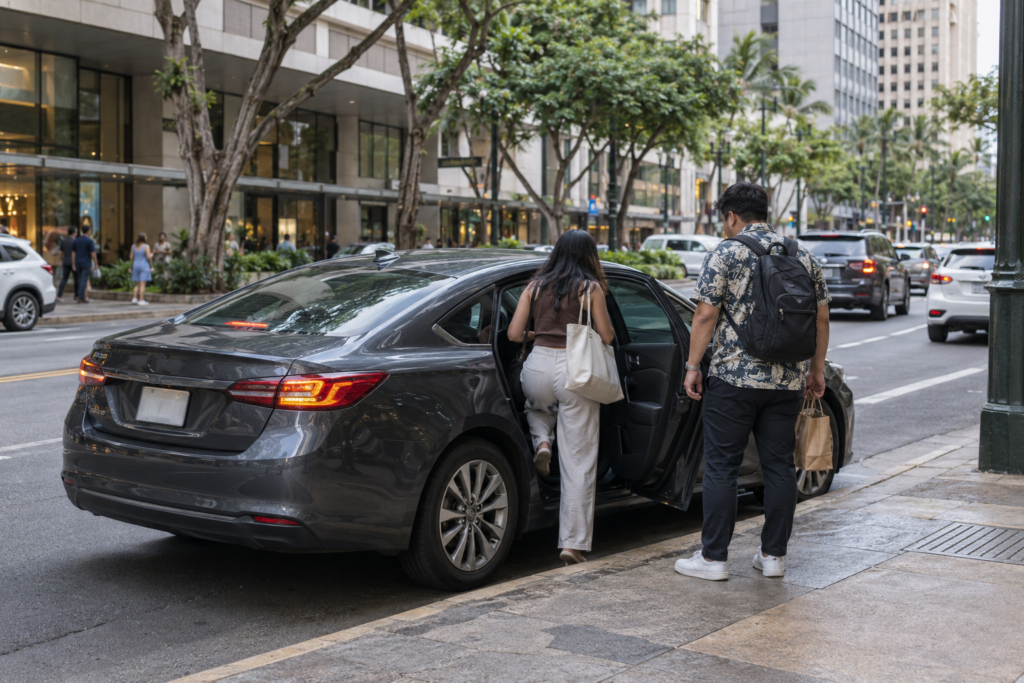
Rideshare services like Uber and Lyft have transformed transportation across Honolulu, providing convenient travel options for local residents and out-of-state tourists alike. Whether you are catching a ride from Daniel K. Inouye International Airport, heading to a resort in Waikiki, or commuting through urban Honolulu, rideshare vehicles fill our roadways around the clock. However, when an Uber or Lyft vehicle is involved in a severe crash, determining who is financially responsible becomes remarkably complicated. Unlike standard auto wrecks involving two private motorists, rideshare collisions introduce layers of corporate insurance policies, driver status periods, and aggressive corporate adjusters.
At Rosenberg Hoffman, our Honolulu-based trial attorneys understand the intense frustration and financial stress that follow a rideshare collision. When a negligent rideshare driver or a third-party motorist causes a crash resulting in severe injuries, holding corporate networks accountable requires specialized legal strategy. Below is a comprehensive breakdown of how insurance coverage works based on app status, why these claims differ from standard car accidents, and how we secure full financial recovery for injured passengers and drivers.
How Rideshare Insurance Coverage Works in Hawaii
The single biggest hurdle in an Uber or Lyft accident claim is identifying which insurance policy applies. Traditional personal auto insurance policies typically exclude coverage if the vehicle is being used commercially to transport passengers for profit. To bridge this gap, major rideshare corporations maintain third-party liability policies, but coverage levels shift dramatically depending on what the driver was doing at the exact moment of impact.
Hawaii law and rideshare platforms divide accident liability into three distinct operational phases:
- Period Zero (App Offline): The driver is logged completely off the app and driving for personal reasons. Only the driver’s personal auto insurance applies, and the rideshare corporation bears zero liability.
- Period One (App Online, Waiting for a Ride Request): The driver is logged into the app and waiting for a passenger match. Because a passenger is not yet aboard, corporate liability is limited to statutory minimums. In Hawaii, this provides primary coverage of at least $50,000 per person and $100,000 per accident for bodily injury, plus $25,000 for property damage.
- Period Two and Period Three (Trip Accepted and Passenger Aboard): The moment the driver accepts a ride request and while they are actively en route to pick up or transport a passenger to their destination, a $1 million commercial liability policy activates.
Securing justice across these distinct periods requires immediate digital evidence collection, including app data logs and trip receipts. You can review our core background by visiting our firm overview page.
Common Causes of Rideshare Collisions on Oahu
Rideshare drivers operate under high-pressure conditions, often racing to complete rides, watching navigation screens closely, or dealing with unfamiliar passengers in heavy Honolulu traffic.
Frequent causes of serious rideshare crashes include:
- Distracted Driving: Staring at smartphone apps, dispatch screens, or incoming ride requests while moving through congested urban corridors like Kapiolani Boulevard or Nimitz Highway.
- Sudden Maneuvers: Pulling abruptly into active traffic lanes, making illegal U-turns to pick up passengers, or stopping suddenly in travel lanes instead of safe loading zones.
- Driver Fatigue: Operating long shifts late into the night after arriving from other jobs, leading to delayed reaction times and severe intersection collisions.
When rideshare drivers or corporate insurers attempt to minimize payouts by shifting blame onto other motorists, our trial attorneys step in to uncover the full truth.
What You Can Recover: Comprehensive Financial Compensation
Collisions involving rideshare vehicles frequently result in debilitating injuries, including traumatic brain injuries, spinal cord damage, severe whiplash, and multiple fractures. Hawaii law allows injured passengers, pedestrians, and third-party motorists to pursue full financial recovery across two primary categories of damages:
- Economic Damages: Every measurable monetary loss resulting from the crash. This includes emergency medical transport, emergency room stabilization, surgical procedures, physical therapy, assistive medical equipment, and lost wages if your injuries prevent you from working.
- Non-Economic Damages: Compensation for intangible losses such as physical pain and suffering, emotional distress, trauma, permanent physical impairment, and the loss of enjoyment of life.
You can read our detailed guide on what compensation you can recover for a Hawaii personal injury case to explore how financial damages are calculated under local law.
Immediate Steps After a Rideshare Accident in Honolulu
The actions taken immediately following an accident involving an Uber or Lyft are critical for preserving evidence and protecting your legal rights.
| Immediate Action | Purpose and Legal Protection |
|---|---|
| Seek Immediate Medical Care | Visit an emergency room or urgent care clinic on Oahu right away to treat injuries and generate formal medical documentation. |
| Screenshot Your Trip Details | Use your smartphone to capture the rideshare trip screen, driver profile, vehicle license plate, and ride receipt. |
| Report the Incident | File an official crash report through the rideshare app safety toolkit and ensure local police document the scene. |
Avoid signing liability waivers or giving recorded statements to corporate insurance adjusters representing Uber, Lyft, or third-party carriers. You can reach out directly via our contact page or call us at 808-470-4819 for immediate guidance.
Hawaii Statute of Limitations and Comparative Fault
Time is a strict constraint when pursuing a personal injury claim against a rideshare corporation or at-fault driver. Under Hawaii law, specifically Hawaii Revised Statutes Section 431:10C-315, the timeline for filing a motor vehicle tort lawsuit is determined by the later of:
- Two years from the exact date of the motor vehicle accident;
- Two years from the last payment of motor vehicle insurance or optional benefits (such as Personal Injury Protection/PIP no-fault benefits); or
- Two years from the last applicable workers’ compensation or public-assistance payment.
Failing to file within the correct applicable window permanently bars your right to recover compensation.
Additionally, Hawaii follows a 51% modified comparative negligence rule. You can recover financial compensation as long as your share of fault for the collision does not reach 51 percent. Insurance defense teams routinely attempt to minimize payouts by arguing passenger negligence. Our trial attorneys actively counter these tactics to protect your recovery.
Protect Your Rights: Contact Rosenberg Hoffman Today
If you or a loved one suffered a severe injury as a passenger, pedestrian, or motorist in a rideshare collision on Oahu, do not let corporate insurance conglomerates dictate the outcome of your recovery. At Rosenberg Hoffman, our Honolulu-based personal injury lawyers have represented crash victims across the Hawaiian islands since 1995. We handle all direct communications, investigate app status records, and build unyielding legal claims to secure your future.
Call 808-470-4819 or visit our contact page to schedule a free, 100% confidential consultation today.
