

When a child or vulnerable person is severely harmed, neglected, or abused within an Oahu public or private school, youth sports organization, athletic league, or religious institution, the immediate reaction from top administrators is rarely transparency. To protect their public reputation, insulate their brand from civil liability, and preserve their operational funding, many local institutions default to a strict strategy of containment. They may bury internal complaints, quietly transfer a problematic employee or coach to a completely different department, or pressure local families into handling the matter through private, internal meetings rather than involving law enforcement.
For survivors and their families on Oahu, breaking through this corporate wall of silence can feel entirely impossible. You know that a life-altering injury or trauma occurred, but the organization’s administration will insist it was a completely unpredictable, isolated incident. They will claim they had absolutely no idea the staff member, coach, or supervisor posed a physical risk to anyone on campus.
Under Hawaii civil law, you do not have to accept their word as the truth. When you file a civil institutional abuse or personal injury lawsuit, your legal team gains access to a powerful judicial mechanism called Legal Discovery. This process strips away an organization’s privacy shields, legally forcing them to turn over internal archives, hidden communications, and locked files to reveal exactly when they knew about the danger and what they did to hide it.
The Legal Tools: How Discovery Pierces Corporate Secrecy
The pretrial discovery phase is the central engine of an institutional abuse or severe premises liability lawsuit. It transforms a case from a basic dispute into a deep investigation. Under the Hawaiʻi Rules of Civil Procedure (HRCP), defendants cannot simply hide behind corporate privacy policies or non-disclosure agreements when a circuit court judge orders them to produce evidence.
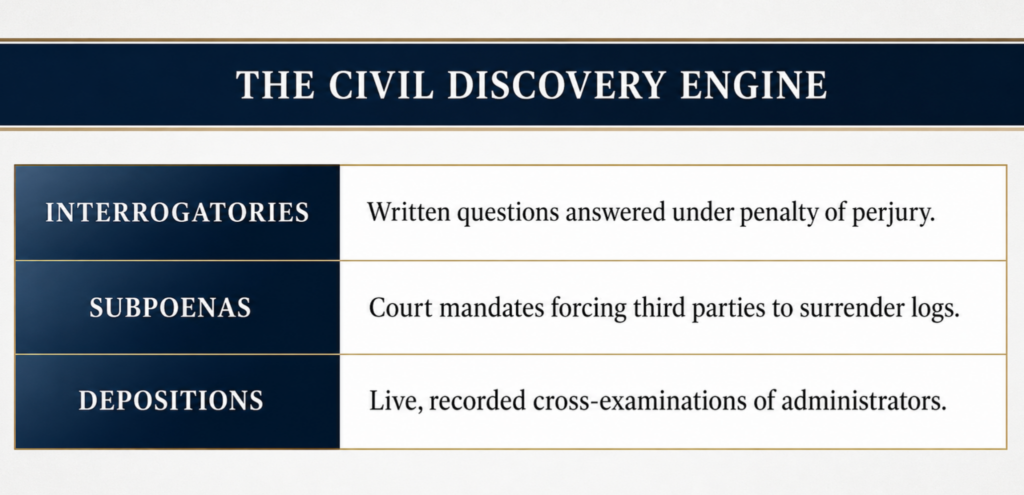
Our experienced personal injury lawyers use a specific mix of these civil discovery tools under Hawaii law to systematically dismantle institutional cover-ups and find the truth:
- Requests for Production of Documents (RFPs): We demand direct access to the exact files institutions fear exposing, such as complete unredacted personnel records, internal communications, board meeting minutes, and historical incident logs.
- Depositions Under Oath: We submerge decision-makers into mandatory, recorded question-and-answer sessions. Facing an experienced trial lawyer under penalty of perjury makes it incredibly difficult for an administrator to maintain a rehearsed corporate script.
- Forensic Electronic Discovery (E-Discovery): Modern cover-ups leave a permanent digital trail. We use advanced e-discovery protocols to target internal chat networks, deleted emails, and server metadata to find out what directors were saying behind closed doors.
Unearthing the “Smoking Gun” in Institutional Injury Claims
To successfully hold an Oahu youth organization, private academy, or childcare facility civilly liable for a severe assault, physical injury, or pattern of abuse, your legal team must prove prior notice. This means showing that the institution knew—or should have known—that a worker, volunteer, or environment was dangerous, yet failed to take reasonable safety actions to protect those under their care.
The discovery phase regularly exposes structural negligence and systemic failures through specific hidden records that our legal team aggressively targets:
| Critical Institutional Document | What It Frequently Reveals During Discovery | Impact on Your Hawaii Injury Case |
|---|---|---|
| Historical Personnel Files | Past disciplinary issues or forced resignations that were hidden from background checks. | Establishes immediate liability for negligent retention or hiring. |
| Internal Safety Audits | Written warnings from safety supervisors about broken gates or unmonitored zones. | Defeats the defense claim that the structural hazard was completely unpredictable. |
| Burying Previous Complaints | Old letters or emails from parents reporting bad behavior that went unaddressed. | Demonstrates a long-standing pattern of reckless disregard for safety. |
| Incident Logbooks | Discrepancies between what happened on-site and what was reported to the parents. | Proves intentional misrepresentation and helps maximize civil recovery. |
To understand how our trial lawyers turn these uncovered documents into full compensation for medical care, long-term therapy, and emotional distress, review our comprehensive guide on What Compensation Can You Recover for a Hawaii Personal Injury Case?.
Frequently Asked Questions About Institutional Discovery
Can an organization refuse to hand over records by claiming they are private?
No. While corporate defense lawyers will routinely object by claiming documents contain proprietary business information or violate employee privacy, they cannot ignore a clear court order. Your personal injury lawyer can file a Motion to Compel, asking a circuit court judge to review the files privately and force the organization to turn them over under a strict protective order.
What happens if an institution purposely deletes or shreds files?
If an organization intentionally destroys evidence once they know a lawsuit is coming, they face severe legal penalties under a doctrine called Spoliation of Evidence. In a Hawaii courtroom, the judge can punish this behavior by giving the jury an “adverse inference” instruction. This means the jury is told to assume that the destroyed files contained clear proof of the organization’s guilt.
How do we uncover hidden electronic communications?
We deploy specialized electronic discovery experts to search the organization’s servers, backup drives, and corporate accounts. Even if an administrator deletes a text or email thread discussing a safety hazard or an incident, the metadata and server backups usually preserve the data, allowing our technical team to recover the exchange.
How long does the discovery phase take in an abuse lawsuit?
The discovery timeline varies based on the size of the institution and the complexity of the cover-up, typically lasting anywhere from several months to over a year. Because corporate defense networks use delays to wear down families, having an aggressive trial team is vital to keep the case moving forward through the court system.
Can discovery uncover previous victims of the same abuser?
Yes. Requesting prior incident reports and student or employee complaints across a specific timeframe is a standard part of the discovery process. Uncovering a pattern of similar complaints destroys the institution’s primary defense tactic: claiming they had zero warning that the individual or environment posed a threat.
Tear Down the Wall of Silence: Contact Rosenberg Hoffman
If you or your child has suffered severe physical or emotional trauma within an Oahu institution, do not let a polite denial or an intimidating legal team stop you from seeking the truth. Corporate risk managers rely on silence, hoping you will drop the matter before their internal records can be brought to light.
At Rosenberg Hoffman, our Honolulu-based personal injury lawyers have been fighting for the rights of local residents, commuters, and injury survivors since 1995. We take over all direct communication with corporate entities, manage complex electronic and paper discovery, subpoena hidden internal records, and build an unyielding case to protect your family’s future.
We provide dedicated representation across a comprehensive range of local personal injury practice areas. Whether your case involves complex institutional liability actions, a devastating resort Slip/Trip-and-Fall Injury, or a catastrophic multi-vehicle collision under Car Accidents, our trial lawyers know how to win.
We protect vulnerable road users in heavy commercial Truck Accidents, two-wheeled Motorcycle Accidents, and transit claims involving Moped, Bicycle, and Pedestrian Accidents or crashes caused by reckless Drunk Drivers. For active-duty service members and visitors, we offer specialized guidance for Tourist and Military Injuries. If your injury involved an unleased animal, we handle Dog Bites and Attacks. In the most heartbreaking circumstances, we stand firmly beside families to seek accountability through Wrongful Death actions.
When you choose our firm, you deal directly with your dedicated trial attorney from start to finish, never an assistant. We handle all personal injury litigation on a strict contingency-fee basis—you pay absolutely nothing upfront, and we collect zero legal fees unless we win your financial settlement.
Call 808-470-4819 or visit https://rhlawhi.com/contact/ to schedule a free, 100% confidential case evaluation.
