

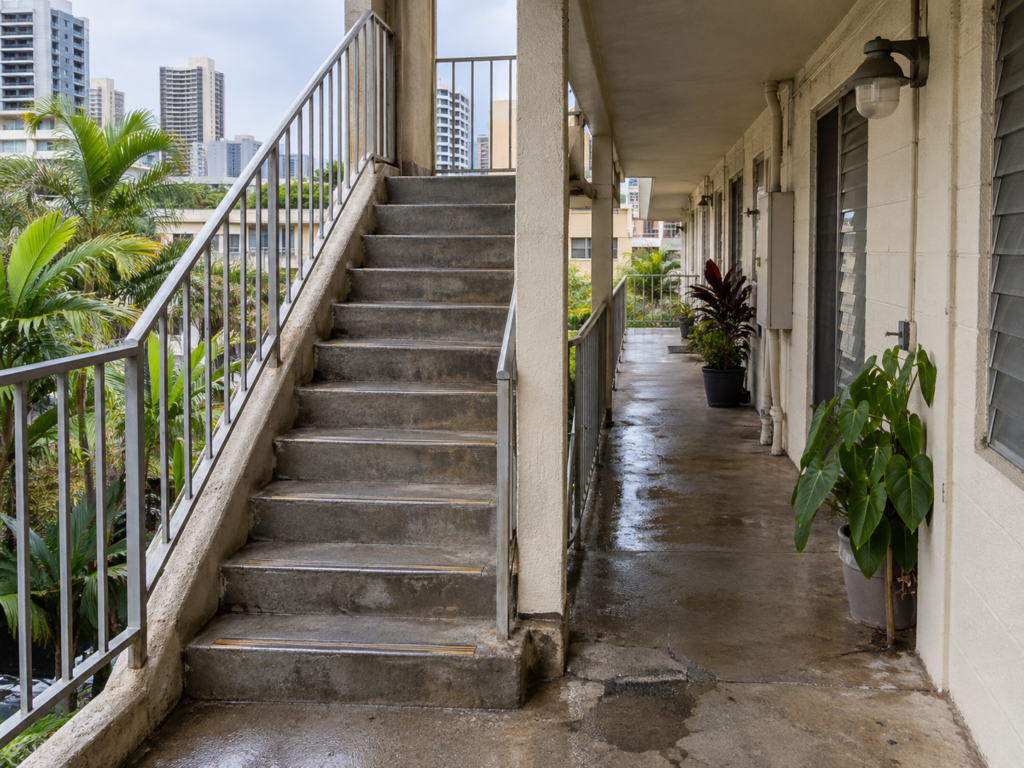
Renting a home, apartment, or condo on Oahu should provide a safe and secure environment for you and your family. While tenants are generally responsible for maintaining the interior cleanliness and safety of their individual units, landlords and property management companies carry a non-delegable legal duty to keep all shared common areas safe. When a property owner neglects routine maintenance in lobbies, shared stairwells, parking garages, elevators, or exterior walkways, devastating slip, trip, and fall injuries can occur.
At Rosenberg Hoffman, our Honolulu-based personal injury lawyers understand how complex residential premises liability claims can be. When a negligent landlord or property management group ignores structural defects, broken handrails, or unlit pathways, tenants and invited guests pay the price. Below is a detailed look at how Hawaii law defines landlord liability for common area hazards, how negligence is established, and how you can protect your rights after an injury.
The Legal Duty: Landlord Responsibilities in Hawaii Multi-Tenant Housing
Under Hawaii premises liability principles, property owners and landlords exercise control over shared areas, which directly ties control to legal responsibility. Common areas include any portion of the residential property used collectively by multiple tenants or visitors, such as:
- Stairwells and Landings: Shared steps requiring secure, uniform handrails and proper structural integrity.
- Walkways and Entryways: Pathways between buildings, sidewalks, and lobby floors vulnerable to tracked-in rainwater.
- Parking Structures and Driveways: Pavement areas requiring adequate illumination and free from severe potholes or hidden tripping hazards.
- Recreational Spaces: Shared swimming pool decks, courtyards, and shared laundry facilities.
Landlords cannot sidestep their safety obligations by inserting vague waiver clauses into lease agreements or shifting maintenance duties entirely onto tenants without proper legal framework. You can learn more about our foundational advocacy by reviewing our firm overview page.
Common Residential Hazards and Proving Landlord Negligence
Injuries resulting from unmaintained residential properties often involve severe physical trauma, including broken bones, torn ligaments, spinal compression, and head injuries. To secure compensation in a residential slip or trip claim, your attorney must prove that the landlord acted negligently.
Proving negligence requires establishing that the landlord had either actual or constructive notice of the dangerous condition:
- Actual Notice: You or another tenant formally notified the landlord or property manager in writing (such as an email or maintenance request sent weeks prior) about a loose handrail or a crumbling step, but they failed to fix it.
- Constructive Notice: The dangerous defect existed for such a length of time that a reasonably prudent landlord, conducting routine property inspections, should have discovered and repaired it.
Landlords cannot escape liability by practicing willful blindness or claiming they never personally inspected the common areas. Regular maintenance and safety audits are basic legal requirements for commercial and residential leasing operations.
What You Can Recover: Seeking Full Financial Compensation
Injuries sustained in a common area fall can alter your financial stability and physical independence. Hawaii law allows injured tenants and guests to pursue comprehensive financial recovery across multiple categories of damages.
Economic damages cover every measurable monetary loss resulting from the accident, including emergency medical care at local hospitals, diagnostic imaging, orthopedic surgeries, physical therapy, assistive medical equipment, and lost wages if your injuries prevent you from working. Non-economic damages compensate for physical pain, emotional distress, permanent scarring, and the diminished quality of your daily life. You can read our detailed guide on what compensation you can recover for a Hawaii personal injury case to explore how financial damages are calculated.
Immediate Steps After a Common Area Fall in Your Building
The steps you take immediately following a fall on a rental property protect both your health and your potential legal claim.
| Immediate Action | Purpose and Legal Protection |
|---|---|
| Seek Immediate Medical Care | Visit a doctor or hospital on Oahu right away to treat injuries and generate formal medical documentation. |
| Notify the Landlord in Writing | Provide a brief, factual written notice to your landlord or property management office detailing the date and exact location of the hazard. |
| Document the Scene | Take clear photographs and videos of the defective step, unlit hallway, or slippery surface before repairs are hastily made. |
Avoid giving recorded statements to the landlord’s insurance adjuster or signing premature liability releases. You can reach out directly via our contact page or call us at 808-470-4819 for an immediate case evaluation.
Hawaii Statute of Limitations for Residential Premises Claims
When dealing with a negligent landlord or property management entity, time is limited. Under Hawaii Revised Statutes Section 657-7, the general statute of limitations for filing a personal injury lawsuit is two years from the exact date of the accident.
Waiting too long allows landlords to alter property conditions, replace broken fixtures, or dismiss maintenance records. Prompt legal action ensures that preservation letters are served and evidence is securely locked down.
Protect Your Rights: Contact Rosenberg Hoffman Today
If you or a loved one suffered a serious injury due to unsafe conditions in the common areas of an Oahu rental property, do not let landlords or insurance companies avoid accountability. At Rosenberg Hoffman, our Honolulu-based personal injury lawyers have represented injured clients across the Hawaiian islands since 1995. We take over all communications, investigate building safety records, and build unyielding legal claims to secure your future.
Call 808-470-4819 or visit our contact page to schedule a free, 100% confidential consultation today.
