

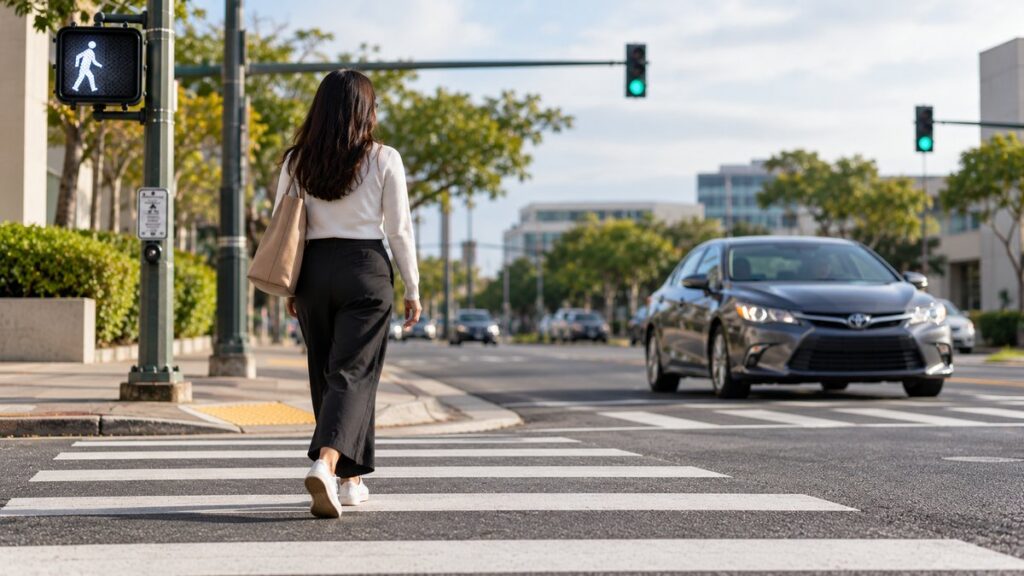
If you were injured as a pedestrian in Hawaii, your legal options depend on how the collision occurred, the available insurance, and the nature of your injuries. Understanding these factors can help you make informed decisions while focusing on recovery.
At Rosenberg Hoffman, we represent people injured in pedestrian accidents as part of its personal injury practice. The firm helps injured individuals understand their legal options when a vehicle collision raises questions about responsibility, insurance, and compensation.
This guide explains what to do after a collision, how fault and insurance may be evaluated, and when legal assistance may be useful.
What to Do After Being Hit by a Car in Hawaii
Your health comes first. Seek medical attention for injuries or concerning symptoms, even if you initially feel able to leave the scene. Some injuries may not be immediately obvious, and a medical evaluation can help identify treatment needs.
If emergency assistance is needed, call 911.
Once you are safe, take the following steps when possible:
- Report the collision. Contact law enforcement and provide an accurate account of what happened.
- Identify the driver. Record the driver’s name, contact information, license plate number, and insurance details.
- Find witnesses. Ask anyone who saw the accident for their contact information.
- Document the location. Photograph crosswalk markings, traffic signals, road conditions, and the surrounding area.
- Keep medical records. Save treatment summaries, bills, prescriptions, and follow-up instructions.
- Track the impact on your life. Note missed work, transportation difficulties, and activities your injuries prevent you from completing.
Do not delay treatment to collect evidence. If your injuries make these steps impossible, a family member or trusted person may be able to help.
Medical documentation can become important if an insurer later questions when symptoms began, whether treatment was related to the accident, or how your injuries affected your daily activities.
Hawaii Crosswalk Laws and Driver Responsibility
Hawaii traffic laws establish responsibilities for drivers and pedestrians. Whether a driver should have yielded can depend on the crossing location, traffic signals, vehicle movements, and what each person was doing before the collision.
For example, a driver turning at an intersection may encounter a pedestrian who is already crossing. Another accident may occur when a pedestrian enters a roadway between intersections.
These situations can involve different legal considerations.
Being outside a marked crosswalk does not automatically determine the outcome of a pedestrian injury claim. The applicable rules and available evidence must be considered together.
Pedestrian Accidents Outside a Marked Crosswalk
Some injured pedestrians worry that crossing outside a designated area means they cannot pursue compensation.
The crossing location may affect how responsibility is assessed, but it is not necessarily the only relevant factor.
An investigation may examine whether the driver was paying attention, how fast the vehicle was traveling, whether the pedestrian was visible, and whether either person had a reasonable opportunity to avoid the collision.
Pedestrians also have responsibilities under Hawaii traffic law. The outcome depends on how those responsibilities apply to the particular circumstances.
Rather than assuming the driver or pedestrian was entirely responsible, it is important to establish what happened and review the relevant legal standards.
How Fault Is Determined in a Pedestrian Accident
Fault is not always clear immediately after a collision.
A driver may claim that the pedestrian stepped into traffic unexpectedly. The pedestrian may report that the driver failed to stop, turned without looking, or was distracted.
Evidence can help clarify these competing accounts.
| Evidence | Why It May Matter |
|---|---|
| Police report | Records initial observations and reported accident details |
| Witness statements | May help establish vehicle movements and crossing conditions |
| Video footage | May show traffic signals, visibility, or the collision |
| Scene photographs | Document crosswalks, roadway markings, and surrounding conditions |
| Vehicle information | Helps identify the driver and potentially relevant insurance |
| Medical records | Document injuries and treatment following the collision |
A police report can be useful, but it may not answer every question about legal responsibility. Likewise, an insurance company’s initial assessment does not necessarily settle a dispute.
Shared Fault and Comparative Negligence
An insurer may argue that both the driver and pedestrian contributed to the accident.
Hawaii has comparative negligence rules that may affect an injury claim when responsibility is shared. How those rules apply depends on the evidence and applicable law.
For example, crossing outside a marked crosswalk may become part of the analysis, but other factors, including the driver’s conduct, may also matter.
An allegation that you were partly responsible should not automatically be treated as a final decision about your legal options.
When responsibility is disputed, a personal injury attorney can review the available evidence and explain how the circumstances may affect a potential claim. You can learn more about Rosenberg Hoffman’s legal team and the firm’s approach to representation.
How Hawaii Car Insurance Applies to Injured Pedestrians
Insurance questions can be particularly confusing when you were walking rather than driving.
You may not own a car, carry automobile insurance, or know which company insures the vehicle that struck you.
Hawaii has a no-fault automobile insurance system that includes Personal Injury Protection (PIP). Depending on the circumstances and applicable policy, PIP benefits may be relevant to certain expenses after a pedestrian collision involving a motor vehicle.
However, coverage should not be assumed without reviewing the facts and policy information.
PIP Benefits and Claims Against a Driver
It helps to separate two questions.
The first concerns whether an applicable insurance policy provides benefits for certain accident-related expenses.
The second concerns whether a driver or another party may be legally responsible for additional losses.
These are related issues, but they are not identical.
For example, determining whether certain medical expenses fall within available insurance benefits may involve different considerations from evaluating whether the driver’s actions caused the collision.
Hawaii law also establishes conditions for pursuing certain motor vehicle injury claims. Whether a person can seek particular damages depends on the circumstances, the injuries involved, and applicable legal requirements.
Neither PIP payment nor compensation through a liability claim is guaranteed simply because a vehicle struck a pedestrian.
Pedestrian collisions can involve insurance and liability questions similar to those arising in other motor vehicle accidents. When insurance coverage is a concern, our article on being hit by an uninsured driver in Hawaii provides related information.
If you receive insurance paperwork that you do not understand, consider seeking guidance before making decisions that could affect your claim.
Uninsured Drivers and Hit-and-Run Accidents
Some pedestrian collisions involve a driver who has no insurance or leaves before providing identifying information.
These situations can complicate the process of determining which insurance coverage, if any, may be available.
If the driver leaves the scene, report the incident promptly. Preserve any vehicle description, partial license plate information, witness details, or video evidence.
Other potential coverage arrangements or recovery options may require investigation. Their availability depends on the facts and relevant policy terms.
A missing or uninsured driver can create obstacles, but it does not necessarily answer every question about possible legal remedies.
Compensation After a Pedestrian Accident
Pedestrian injuries may affect more than your immediate medical expenses.
You might need rehabilitation, miss work, rely on others for transportation, or have difficulty completing ordinary activities during recovery.
Depending on the applicable law and supporting evidence, potentially relevant losses may include:
- Medical expenses: Treatment, follow-up appointments, and rehabilitation related to the collision.
- Lost income: Earnings missed because injuries prevent you from working.
- Future treatment needs: Additional care supported by appropriate medical evidence.
- Reduced earning capacity: Longer-term work limitations in qualifying circumstances.
- Pain and suffering: Non-economic losses when legally recoverable.
These categories describe possible damages, not automatic payments.
The seriousness of the injury, available insurance, liability evidence, and legal requirements may affect what compensation can be pursued.
Documenting the Effects of an Injury
Keep records that show how your injuries affected your recovery and daily life.
Medical bills and treatment summaries can help document healthcare expenses. Employment records may help establish time away from work.
It may also be useful to record practical limitations, such as difficulty walking, driving, or managing household responsibilities.
Avoid making assumptions about future medical expenses or permanent limitations. Those issues may require evaluation by qualified healthcare professionals.
The goal is to preserve accurate information, not to predict the outcome of a claim.
How a Pedestrian Accident Lawyer Can Help
Pedestrian injury claims can involve disputed responsibility, insurance questions, and uncertainty about the full effects of an injury.
A lawyer can review the circumstances, evaluate available evidence, explain relevant legal requirements, and identify potential next steps.
Legal guidance may be particularly useful when:
- The driver denies responsibility.
- You were struck outside a marked crosswalk.
- Your injuries require significant treatment.
- The driver was uninsured or left the scene.
- You are unsure which insurance company may be involved.
- Your injuries have affected your ability to work.
At Rosenberg Hoffman, we represent people injured in pedestrian accidents as part of its personal injury practice. Depending on the circumstances, legal assistance may involve reviewing accident evidence, evaluating disputed responsibility, examining relevant insurance questions, and explaining options for pursuing a claim.
The firm emphasizes direct communication with an attorney. Readers can learn more about Rosenberg Hoffman’s attorneys before requesting a consultation.
We have offices in Honolulu and Waipahu and offer consultation options by phone or video.
Discuss Your Pedestrian Injury With Rosenberg Hoffman
After being hit by a car, you may have questions about medical expenses, responsibility, insurance coverage, and the effect of your injuries on your future.
You do not need to resolve every question before speaking with an attorney.
At Rosenberg Hoffman, we offer free consultations for people seeking information about potential personal injury claims.
Call 808-470-4819 or request a free consultation to discuss your circumstances and learn what legal options may be available.
Legal disclaimer: This article provides general information and is not legal advice. Reading it or contacting Rosenberg Hoffman does not, by itself, establish an attorney-client relationship. The options available depend on the facts and applicable law. See the firm’s full disclaimer.
