

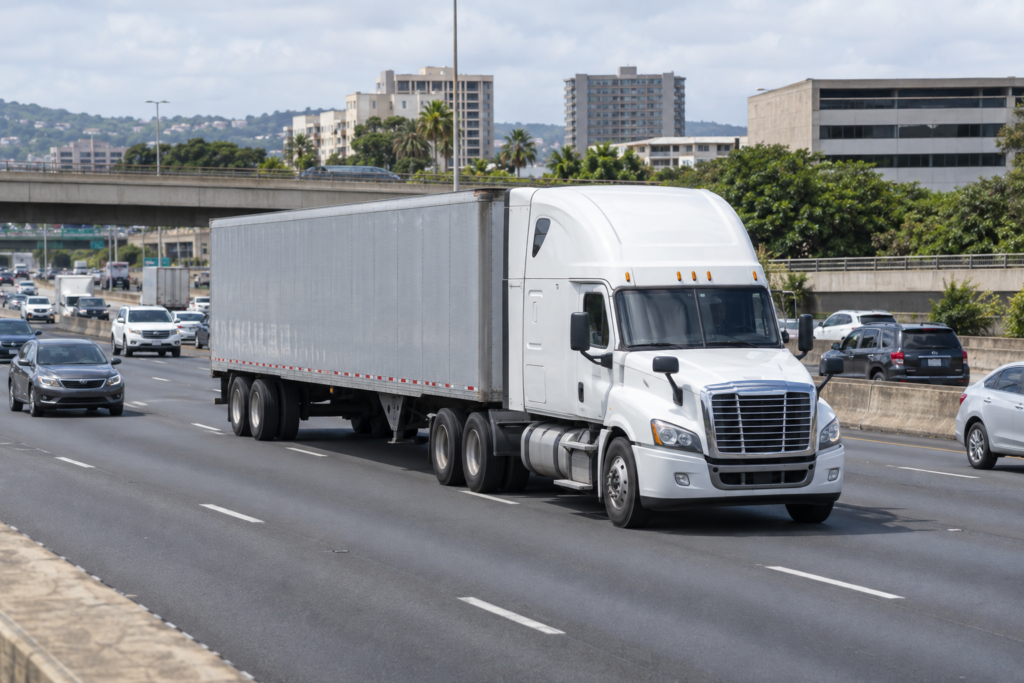
Driving along Oahu’s primary arterial highway, the H-1, during peak traffic hours exposes motorists to massive commercial semi-trucks, freight haulers, delivery vehicles, and construction transports. When a standard passenger vehicle collides with an 80,000-pound commercial truck, the resulting physical trauma is often catastrophic. Victims frequently suffer severe traumatic brain injuries, spinal cord damage, multiple bone fractures, or fatal trauma. Unlike typical two-car fender benders, commercial truck wrecks involve an intricate web of federal safety regulations, corporate insurance syndicates, and multiple potentially liable parties.
At Rosenberg Hoffman, our Honolulu-based trial attorneys understand the devastating impact of commercial vehicle crashes. Holding a negligent trucking corporation accountable requires a deep investigation that goes far beyond the driver behind the wheel. Below is a comprehensive look at how multi-party liability works under federal and Hawaii state standards, why truck accident claims differ fundamentally from standard auto wrecks, and how we secure maximum financial recovery for injured victims.
Why Commercial Truck Accidents Involve Multi-Party Liability
In a standard car accident, fault typically rests solely with the other individual motorist. Commercial truck collisions, however, introduce complex third-party liability rules because the operation, maintenance, and loading of a heavy commercial vehicle are often split among several separate corporate entities.
When investigating an H-1 freeway crash or a collision on local Oahu distribution routes, liability may extend to several distinct parties:
- The Commercial Driver: The individual operating the rig may bear direct fault for speeding, distracted driving, driving while fatigued, or violating federal service hour limits.
- The Motor Carrier or Fleet Operator: The trucking company employing the driver can be held directly liable under agency principles or for negligent hiring, poor safety training, or pressuring drivers to violate rest regulations.
- Cargo Loaders and Shipping Hubs: Improperly secured, shifted, or overloaded freight can cause a semi-truck to jackknife or lose control on curves. The third-party logistics company responsible for loading the trailer shares direct fault.
- Maintenance Facilities and Part Manufacturers: If a mechanical failure such as sudden brake loss, steering malfunction, or tire blowout triggers the crash, the third-party service garage or equipment manufacturer can be held accountable.
Unraveling these corporate layers requires immediate legal intervention to subpoena electronic control module (ECM) data, driver logs, and maintenance records before they disappear. You can review our core background by visiting our firm overview page.
Federal Motor Carrier Safety Administration (FMCSA) Regulations
Commercial trucking operations on Oahu are governed stringently by the Federal Motor Carrier Safety Administration (FMCSA). These federal safety rules establish baseline operational mandates designed to protect the public from dangerous commercial traffic. Violations of FMCSA guidelines serve as powerful, objective evidence of negligence in a civil injury claim.
Key federal regulations heavily scrutinized during our investigations include:
- Hours of Service (HOS) Mandates: Strict limits on how many consecutive hours a commercial driver can operate behind the wheel without mandatory rest breaks, designed to prevent devastating driver fatigue.
- Mandatory Drug and Alcohol Testing: Federal rules require pre-employment, random, and post-accident substance screening for commercial license holders.
- Vehicle Inspection and Maintenance Logs: Motor carriers are legally mandated to conduct systematic pre-trip and post-trip inspections, documenting all mechanical repairs and part replacements.
When trucking companies cut corners on safety compliance to maximize freight delivery speeds, our trial attorneys leverage these federal violations to build unyielding liability claims.
What You Can Recover: Comprehensive Financial Compensation
Collisions involving heavy commercial transport frequently result in catastrophic injuries requiring prolonged hospitalization, multiple surgeries, and lifelong medical care. Hawaii law allows injured victims to pursue full financial recovery across two primary categories of damages:
- Economic Damages: Every measurable monetary loss resulting from the crash. This includes emergency medical transport, ICU stabilization, surgical interventions, physical therapy, assistive medical equipment, future medical care, and lost wages or diminished earning capacity.
- Non-Economic Damages: Compensation for intangible losses such as physical pain and suffering, emotional trauma, permanent disfigurement, and the loss of enjoyment of life.
Because commercial carriers carry multi-million dollar liability insurance policies, securing complete financial recovery is vital for long-term stability. You can read our detailed guide on what compensation you can recover for a Hawaii personal injury case to explore how financial damages are calculated under local law.
Immediate Steps After a Commercial Truck Collision
The actions taken immediately following a crash with a commercial truck on the H-1 or local Oahu roads are critical for preserving evidence.
| Immediate Action | Purpose and Legal Protection |
|---|---|
| Seek Immediate Medical Care | Call emergency services right away. Official medical records establish the direct link between the crash and your physical trauma. |
| Preserve Trucking Evidence | Document the scene with photographs, noting the trucking company name, DOT numbers, license plates, and debris fields. |
| Avoid Direct Insurer Statements | Do not give recorded statements to corporate adjusters or investigators representing the trucking fleet. |
Commercial carriers often dispatch rapid-response investigative teams to accident scenes within hours to minimize corporate liability. Having an experienced legal team step in immediately ensures that black box data, driver logs, and physical evidence are formally preserved. You can reach out directly via our contact page or call us at 808-470-4819 for immediate guidance.
Hawaii Statute of Limitations and Comparative Fault
Time is a strict constraint when pursuing a personal injury claim against a commercial carrier. Under Hawaii Revised Statutes Section 657-7 and related state rules, the general statute of limitations for filing a personal injury lawsuit is two years from the exact date of the incident. Failing to file within this window permanently bars your right to recover compensation.
Additionally, Hawaii follows a 51% modified comparative negligence rule. You can recover financial compensation as long as your share of fault for the collision does not reach 51 percent. Insurance defense teams routinely attempt to shift blame onto passenger vehicle drivers. Our trial attorneys actively counter these tactics to protect your recovery.
Protect Your Rights: Contact Rosenberg Hoffman Today
If you or a loved one suffered severe injuries in a commercial truck collision on the H-1 or anywhere across Oahu, do not let corporate trucking insurers dictate the outcome of your recovery. At Rosenberg Hoffman, our Honolulu-based personal injury lawyers have represented crash victims across the Hawaiian islands since 1995. We handle all direct communications, investigate federal compliance records, and build unyielding legal claims to secure your future.
Call 808-470-4819 or visit our contact page to schedule a free, 100% confidential consultation today.
